

 Menu
 Close
A Guide to Cross-Country Skiing
Everything you need to know to make a start with Cross-country skiing!

- Discover Snowsports
- A Guide to Cross-Country Skiing
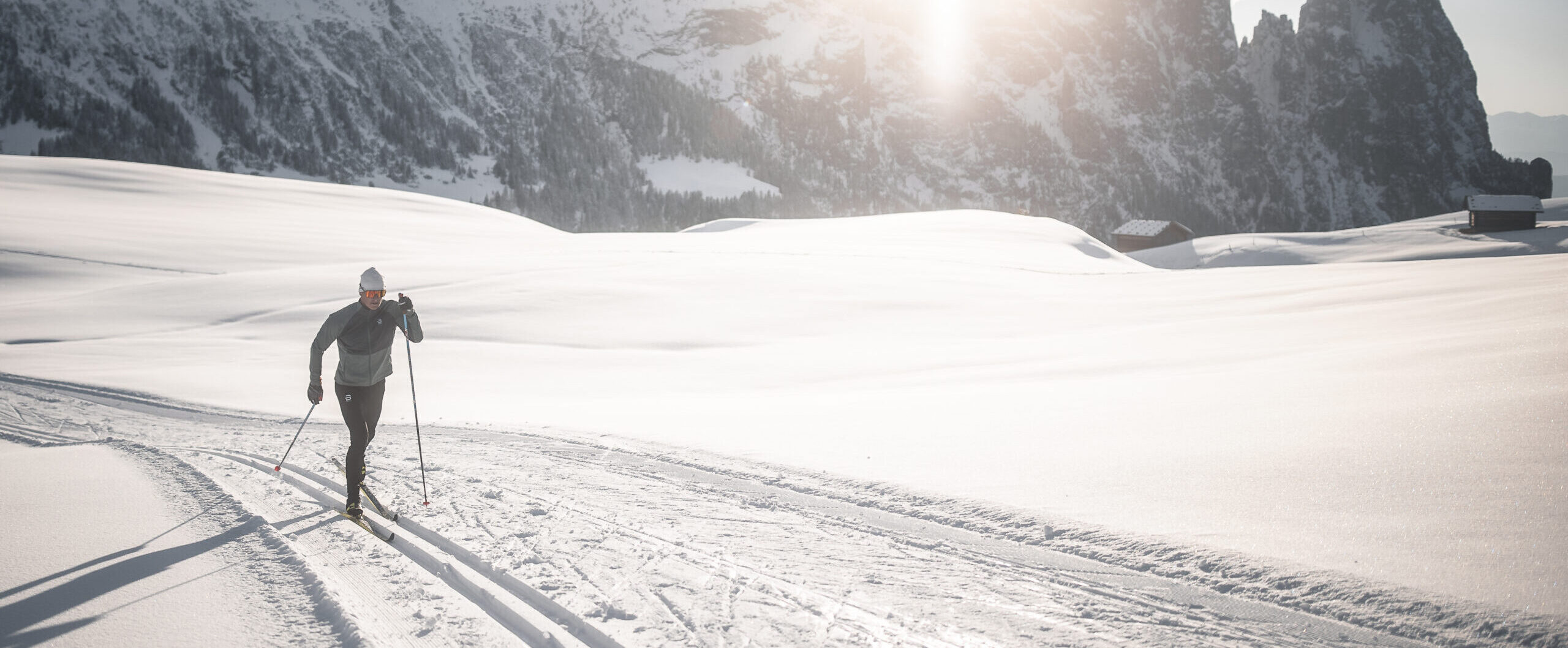
Cross-country skiing, or Nordic skiing, offers a relaxed way to enjoy winter landscapes, gliding along snowy trails through forests and across open fells
Find your rhythm on snow with Wildtrack Nordic
The Ski Club of Great Britain has partnered with Wildtrack Nordic to bring members closer to the beauty and exhilaration of cross-country skiing. Founded by former Olympians, Wildtrack creates small-group holidays where expert, confidence-building coaching, high-quality equipment, and carefully chosen hotels come together in remarkable winter landscapes. Whether you are taking your first glide, building your technique or ready to ski further, you will be welcomed, coached and looked after along the way.
Ski Club members receive £150 off per booking with Wildtrack Nordic. Your next winter adventure starts here.
What Is Cross Country Skiing?
Cross-country skiing is a way to travel through winter landscapes under your own power. Often called Nordic skiing, it takes you along prepared trails through forests, across open fells and into the mountains. The pace can be calm and unhurried or more athletic, depending on the terrain, your technique, and the kind of day you want.
Unlike downhill skiing, the heel of a cross-country ski boot lifts freely from the ski. This allows you to stride and glide over flatter ground, climb hills, and travel further into the landscape. Prepared trail networks may have parallel tracks for classic skiing and a wider, smooth lane for skate skiing.
Whatever technique you choose, balance, movement, and rhythm are important foundations. With practice, these skills help you feel more secure on the snow and enjoy the trail ahead.
CLASSIC TECHNIQUE
Classic skiing
Classic skiing uses a striding movement, with the skis travelling parallel in tracks groomed into the snow.
A grip zone beneath the foot helps one ski push back against the snow while the other glides forward.
As balance and timing develop, the movement becomes smoother and more efficient. Many beginners find classic skiing a straightforward introduction on groomed trails, although the best style to learn depends on your interests and the facilities at your chosen destination.
SKATE TECHNIQUE
Skate skiing
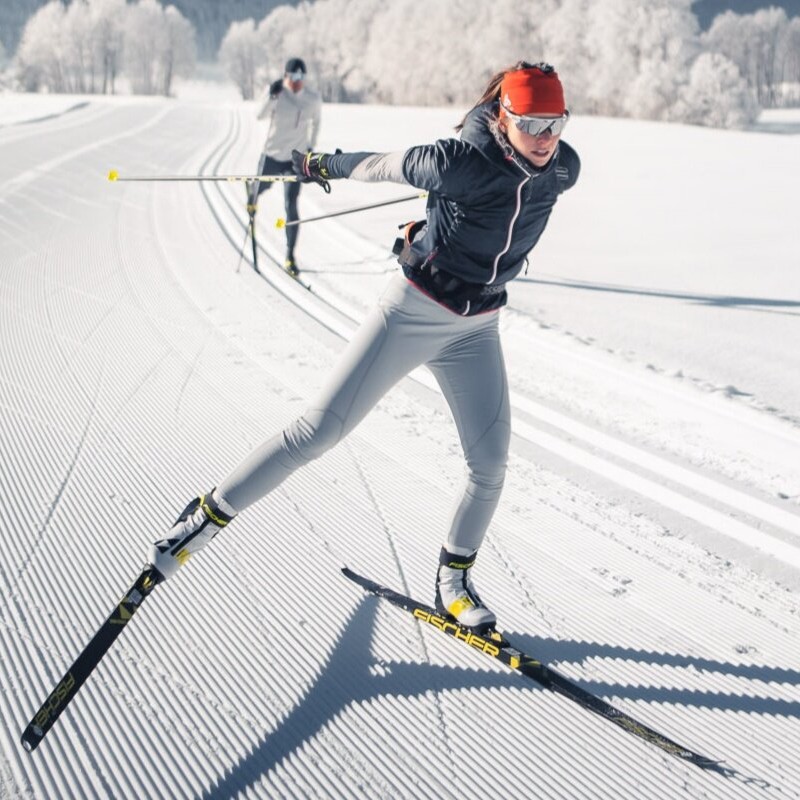
Skate skiing uses a side-to-side push, with the skis forming a shallow V as you move from one ski to the other. The leg action is similar to ice skating.
It is practised on a wider, groomed lane, often beside the classic tracks. The technique is dynamic and relies on balance, weight transfer and rhythm.
Skate equipment differs from classic equipment, with shorter skis, longer poles and more rigid boots, so choose equipment for the technique you plan to learn.
BEYOND GROOMED TRAILS
Off-track skiing
Off-track skiing takes you beyond prepared trails into quieter or more remote terrain.
Wider skis and sturdier boots suit these conditions, but the right set-up depends on the snow and route.
Travel away from groomed trails also asks for more planning, navigation and awareness of weather and terrain. If you are new to it, seek local advice and go with an experienced guide.
Is Cross Country Skiing Right for You?
Contrary to widespread belief, you do not need to be exceptionally fit or flexible to begin cross-country skiing. With patient coaching and gradual practice, you can build the balance, movement, and stamina to enjoy it.
A beginner holiday can be suitable even if you have never skied before. Previous experience on alpine or other skis may make the first days feel more familiar, but it is not essential. Time to practice, supportive coaching and growing confidence all help you progress.
Cross-country skiing is active, and a full day on snow takes energy. The effort depends on the terrain, conditions, and pace. A good introduction balances learning and practicing with time to rest and enjoy the surroundings. You do not need to arrive with an elevated level of fitness or perfect technique; the aim is to make steady progress at a pace that suits you.
If you already ski, quality coaching can help you make small adjustments that improve your balance, timing, and efficiency. Improver trips build on existing foundations, developing confidence and control across more varied terrain. From a first glide to a new ambition, there is always another part of the sport to explore.
Understanding Cross-Country Ski Trails
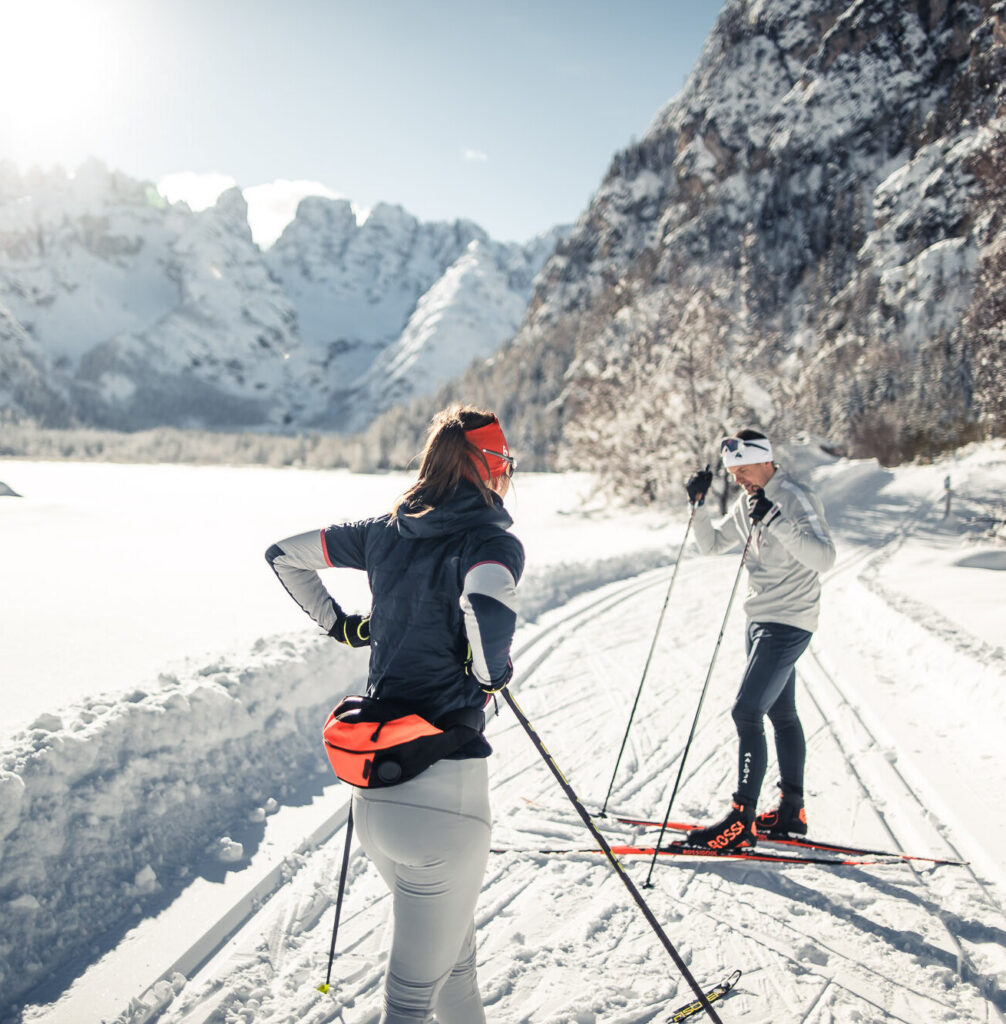
Cross-country trail networks can include short loops, longer journeys, and routes with different amounts of climbing and descending. Groomed trails may be prepared for classic skiing, skating, or both. Signs and trail maps can show distance, direction, difficulty, and links to nearby routes.
Difficulty colours and grading systems vary by destination. Read the local trail information and consider the route’s length, elevation, descents, and current snow conditions as well as its stated grade. A trail that feels comfortable in fresh, well-groomed snow may feel quite different when it is icy or visibility is poor.
On shared trails, follow local signs and keep to the correct lane where possible. Keep skate skis out of the classic tracks, pass others with care, and keep your poles close to your body around other skiers. Choose a speed that lets you stop safely. If you stop or fall, move clear of the trail as soon as you can.
Many cross-country areas publish trail information online or through local apps. These may show route distances, elevation, difficulty, grooming, and snow conditions. Check out the recommended trail resource before setting out, as the available information and apps vary from place to place.
Where Can You Go Cross Country Skiing?
Cross-country skiing is practiced in snowy regions around the world, from Scandinavia and the Alps to North America and parts of Asia. For UK skiers, established destinations include Norway, Finland, Italy, Austria, France, and Switzerland. Each offers different landscapes, trail networks, and styles of skiing.
When choosing where to ski, think about the terrain you want, the time of year, snow conditions, how you will reach the trails and whether you would like coaching or equipment to hire. Beginners often benefit from gentle routes and a clear progression to more varied terrain. Experienced skiers may be looking for longer journeys, a particular technique to work on, or a bigger challenge.
Choosing a destination can feel daunting. Start with what matters most to you, then compare a few practical details:
- How reliable is the snow at the time of year I want to travel?
- Does the destination have the type of accommodation I want?
- How far is it from the nearest airport or train station?
- Does the trail network offer the kind of skiing I want?
How To Get Started
A lesson with a resort instructor is a reasonable place to start, especially if you want to try cross-country skiing before a longer holiday. It can introduce the basic techniques and give you some feedback. A few lessons may not leave much time for an instructor to understand how you learn, build a strong working relationship with you, or follow your progress over several days. Instructors’ experience also varies: some specialize in cross-country skiing, while others teach several snow sports. If you book a lesson, ask about their Nordic experience and how much time you will spend practicing on the trails.
The same questions matter when booking a cross-country holiday. Some operators use guides who lead several kinds of outdoor activity and may not specialize in Nordic technique or coaching. Before booking, ask who will coach you, what experience they have teaching cross-country skiing, what qualifications they hold and whether those qualifications are recognized in the country where they teach. It is also useful to ask how much of the program is dedicated to coaching and how many guests each coach will work with.
A dedicated cross-country holiday gives you more time to learn, practice, and put new skills to use on the trails. Coaching over several days lets the instructor understand how you learn, build on what you have already practiced and adapt their guidance as you progress. Small groups allow more time for individual feedback and questions. Coaching can begin with stance, balance and movement, then develop grip, glide, rhythm, and control.
A typical beginner day balances focused skill development on gentle terrain with time to rest, followed by a short journey to practice those skills on the trail. As confidence grows, the journeys can become longer and the terrain more varied. For skiers with experience, coaching can focus on timing, balance, efficiency, speed control, and adapting techniques to different terrains. Video feedback can help you see what is happening and understand what to work on next.
Planning Your First Cross-Country Ski Trip
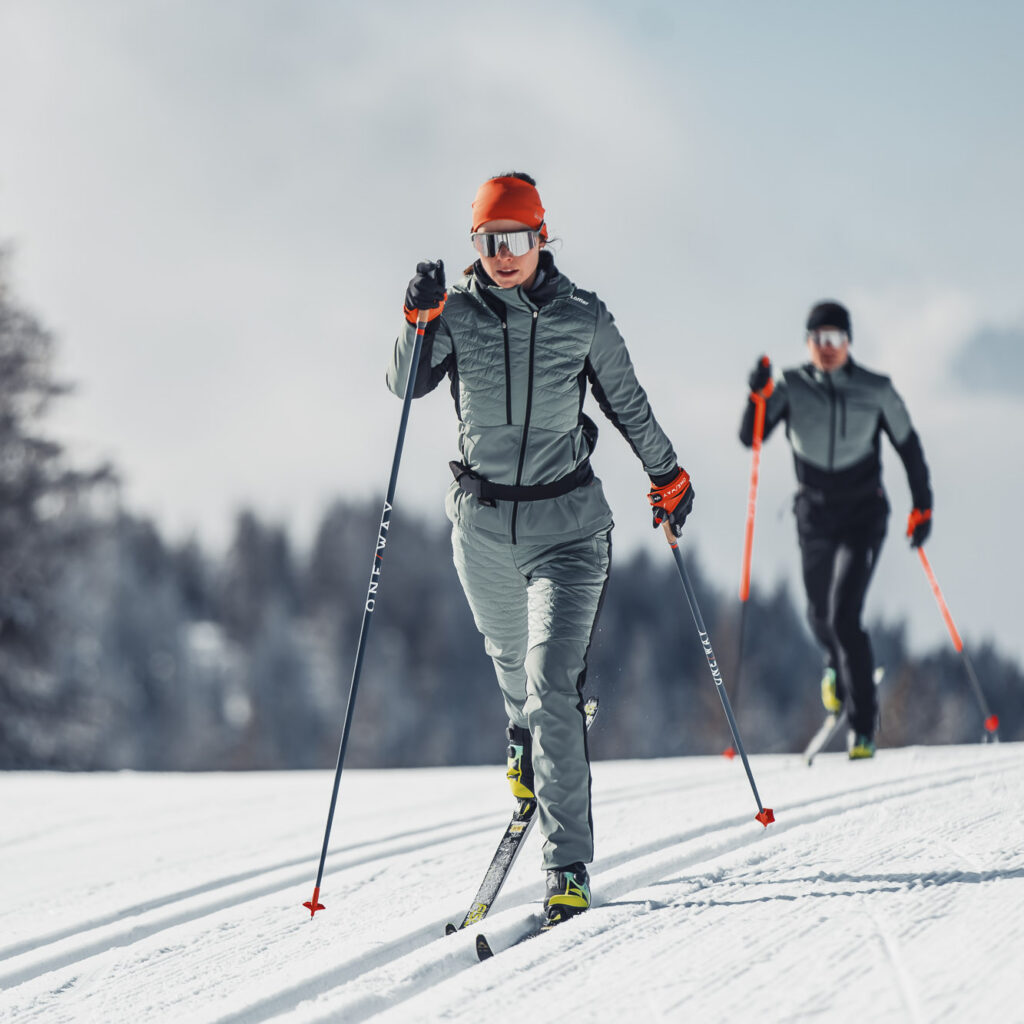
Start by deciding what you want from the trip: a few lessons as part of a wider holiday, or a dedicated cross-country skiing experience. Specialist providers may offer shorter breaks of four or five nights as well as full-week holidays. Research the destination trail network and make sure it offers the terrain, variety, and level of support you are looking for. Not every cross-country area has enough suitable skiing for a full holiday, or routes that match every ability. If you need to hire equipment, check what is available before booking.
Think about the whole experience as well as the skiing: how you will reach the trails, where you will stay, how much time you want to spend on snow and what support would help you enjoy the trip. A well-planned hosted holiday with a specialist provider can bring coaching, equipment, accommodation, transfers, and daily plans together, leaving you free to focus on learning and enjoying the winter landscape.
Simple packing list for beginner cross-country skiers
- Base layers (min 2)
- Warm mid-layer and fleece
- Waterproof, breathable jacket
- Form-fitting trousers or thick leggings
- Ski socks of varying thicknesses to ensure that boots fit
- Cross-country specific gloves, plus a warm spare pair
- Hat or headband and neck warmer
- Sunglasses or ski goggles
- Sunscreen and lip balm
- Small daypack
- Water bottle and/or flask/thermal mug
- Snacks
- Casual clothes and comfortable shoes for evenings
- Swimwear, if your accommodation has a pool or sauna
- Any regular medication, travel documents, and phone charger
Wildtrack Nordic specializes in premium, small-group cross-country skiing holidays for beginners, improvers, and experienced skiers. Expert coaching, high-quality equipment, carefully chosen hotels, and attentive hosting come together in destinations across Italy, Finland, Switzerland and Norway. Ski Club of Great Britain members can find details of the current Wildtrack Nordic member offer through the Club’s partner page.
 Menu