

 Menu
Menu Close
Close
- News
- From Duct Tape to Data: How a British Basement Start up is Changing Skiing
Ski Club sits down with Carv founders Alex and Pruth to hear how two engineers from London ended up building a digital ski coach that’s now used by tens of thousands of skiers around the world.
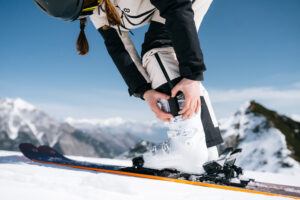
Alex: Carv is a digital ski coach that helps you get better every time you ski. It’s made up of two small sensors that clip to your ski boots and measure how you move. As you ski, it gives you real-time feedback through your headphones – a bit like having an instructor in your ear, but one who’s with you on every run. It tracks your balance, edge control and timing, then gives you a clear focus for what to work on next. The idea is simple: the better you ski, the more fun you have.
________________________________________
Pruth: It began with a really simple idea: could we use data to help people ski better? It sounded a bit crazy at the time. We weren’t ski racers; we were just two engineers who loved skiing. So, we taped a couple of iPhones to a pair of skis in a car park to see if we could record a turn. The data was rough, but it worked well enough that we thought, okay, maybe there’s something here.
________________________________________
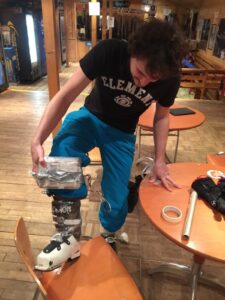
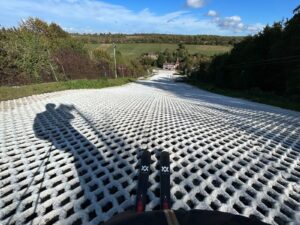
Pruth: The first prototype was basically a cardboard box full of wires connected to a laptop. It worked, but we knew we needed to make it smaller. What came next looked suspiciously like something you shouldn’t be carrying through a busy station, which the bomb squad at Liverpool Street quickly agreed with. Once we got that out of the way, we took it to Brentwood dry slope in East London, our first “home mountain.” That’s where we made the first real turns and proved we could measure motion with enough precision to learn something useful. It wasn’t glamorous, but it worked.
________________________________________
Alex: It’s come a long way since those cardboard box days. Today, Carv is two tiny motion sensors that clip to your ski boots. They measure how you move and balance, then give you real-time coaching through your headphones. More than 51,000 skiers now use Carv, from Deer Valley to St. Anton, even in places we didn’t know people could ski, like Greenland and Morocco. Together they’ve logged over a billion turns and received about twenty million coaching tips. It’s incredible to see how far it’s come, from a rough idea in a basement to something that’s helping skiers all over the world understand their skiing and keep improving every run.
________________________________________
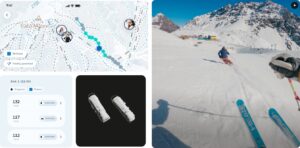
Pruth: We’ve learned from a lot of mistakes along the way. We’ve broken thousands of sensors, crashed a few laptops, and definitely come up with some terrible metaphors. “Ski like an athletic banana” still comes up in the office every now and then. But every mistake taught us something about how people actually learn. The big one was realising that most skiers don’t want to train all day – they just want to ski. So we made Carv fit into a normal day on the mountain. One clear tip per run, one number to track progress – your Ski:IQ – and that’s it. The whole idea is that when you ski better, you have more fun. That’s what it’s always been about.
________________________________________

Alex: Not at all. It’s been amazing to watch it grow. There are skiers organising their own Carv demo days, parents comparing Ski:IQ scores with their kids, and people online trying to reverse-engineer our metrics. One of my favourite stories is from a mum whose daughter was asked at school, “Who’s your role model?” She said, “My mum … because she uses Carv and has a Ski:IQ of 135.” You can’t plan moments like that. We’ve also had plenty of direct feedback, things like, “Please change the voice, it sounds like a robot.” Fair point. We did. That kind of honesty keeps us improving, just like the skiers we’re helping.
________________________________________
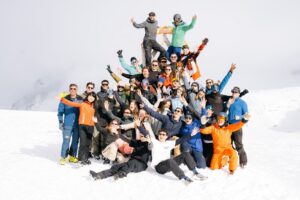
Pruth: Quite a lot, actually. Carv might be used everywhere now, but it’s definitely got British roots. We were built on dry slopes, tested in fridge-like ski domes, and refined in the Alps. That mix of places, and the people around them, really shaped us. There’s a determination in British skiers; we’ll drive six hours for a few icy laps, and that same spirit runs through the team. We’re really proud to be a UK company built from that passion for skiing that lives here, and even prouder to see something that started in London now helping skiers all over the world ski better and have more fun.
________________________________________
Alex: Honestly, it’s seeing people find something new in their skiing. When someone tells us they’ve discovered a feeling they didn’t know they could have on snow, that extra bit of control or flow that makes it more fun, that’s what makes it worth it. We’ve analysed over a billion turns now, but we’re still learning. The best part of skiing is that there’s always another run, and that next turn is always the one that could change everything.



 Menu
Menu