

 Menu
Menu Close
ClosePara snowboard banked slalom is a timed event in which athletes race individually down a course of tightly banked turns, with the fastest combined time across runs determining the winner.

- News
- Para Alpine and Para Snowboard Guide
Para-Alpine Skiing and Para Snowboarding at Milano Cortina 2026 Guide
Para-alpine skiing and Para Snowboarding are some of the most exciting sports at the Winter Paralympics. They combine speed, technical precision and remarkable athletic ability, set against a spectacular mountain backdrop.
At the Milano Cortina 2026 Paralympic Winter Games, alpine skiing and snowboarding will once again take centre stage. If you’ve never watched para-alpine skiing or para-snowboarding before, this guide explains how each sport works, the events involved, the athlete categories, and who to watch from Team GB.
What is Para-Alpine Skiing?
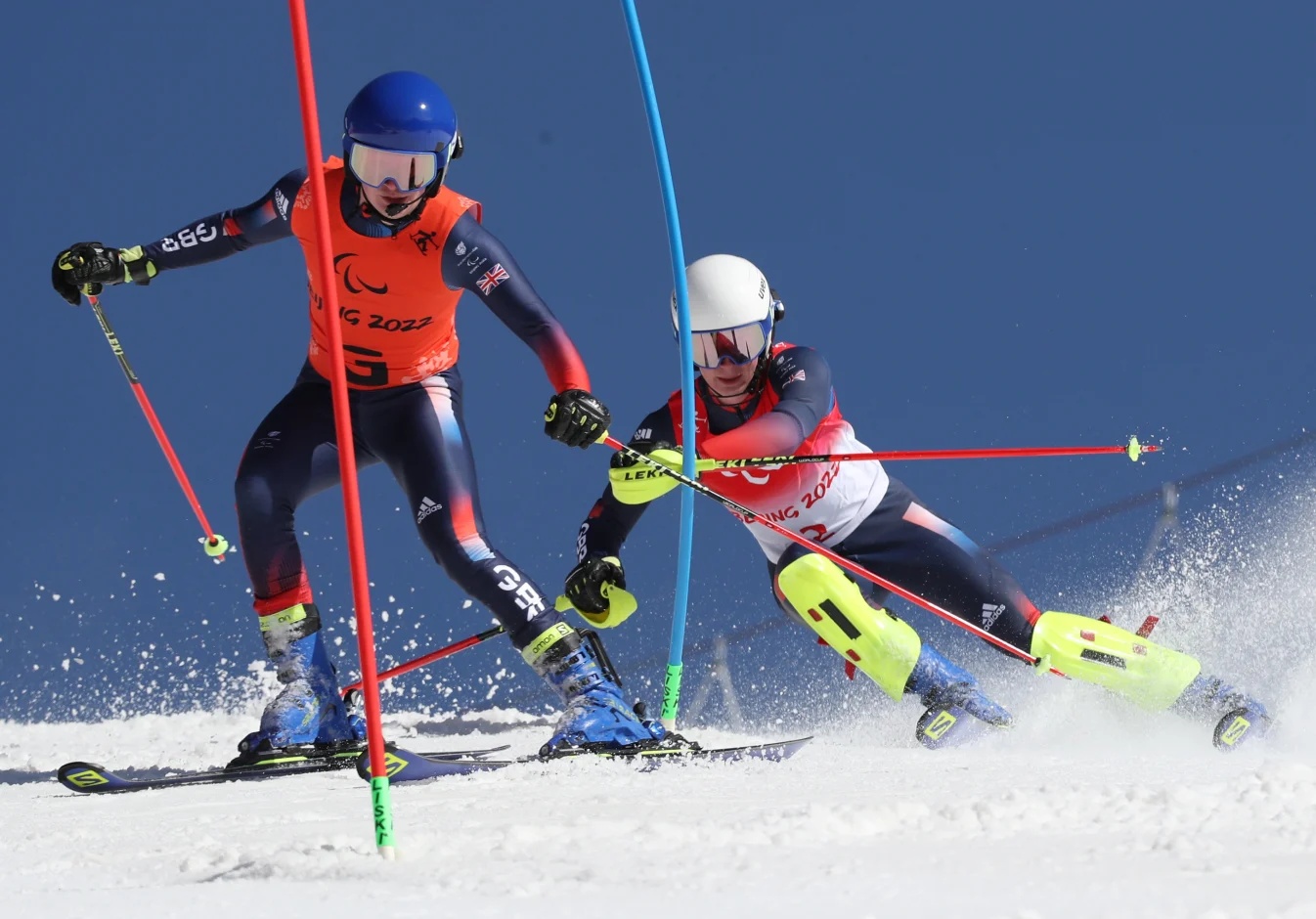
Para-alpine skiing is the Paralympic equivalent of Olympic alpine skiing. Athletes compete on downhill ski courses in events that mirror the Olympic programme, adapted for skiers with physical or visual impairments.
To ensure fair competition, athletes are grouped into classifications and race using a factoring system, allowing skiers with different impairments to compete together in the same event.
What is Para Snowboarding?
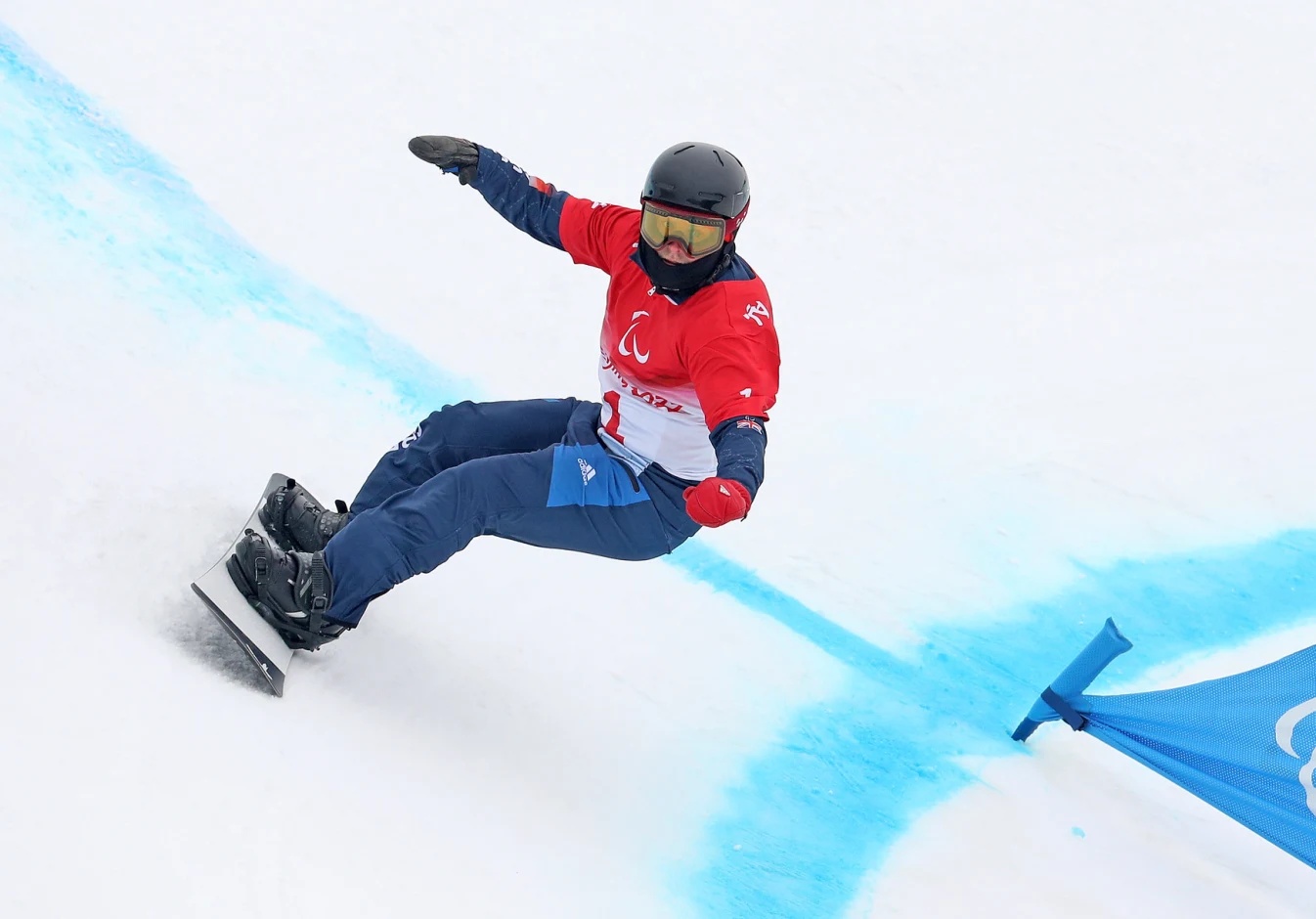
Paralympic snowboarding is an adaptive winter sport at the Winter Paralympic Games where athletes with physical impairments compete in fast-paced downhill events. The main disciplines are snowboard cross (SBX) and banked slalom. In snowboard cross, riders race head-to-head on a course featuring jumps, rollers, and banked turns, with the first across the finish line advancing.
In banked slalom, athletes race individually against the clock on a course made up of tight, banked turns, with combined run times determining the winner. Competitors are grouped into classification categories based on their impairments to ensure fair competition, making the sport both inclusive and highly competitive.
Paralympic Alpine Skiing Events Explained
The Paralympic alpine programme features five disciplines, each testing different skiing skills.
Downhill
The fastest event on the programme. Long courses, wide turns and high speeds reward confidence and clean technique.
Super-G
A blend of speed and precision. Faster than Giant Slalom but more technical than Downhill.
Giant Slalom
A technical discipline with wider turns and rhythm-based skiing across two runs.
Slalom
The most technical event, with tightly spaced gates demanding fast reactions and agility.
Super Combined
One speed run (usually Super-G) combined with one Slalom run. The athlete with the lowest combined time wins.
Paralympic Snowboard Events Explained
Snowboard Cross
Para snowboard cross is a high-speed event where athletes race head-to-head down a course filled with jumps, rollers, and banked turns, with the first rider across the finish line progressing to the next round.
Banked Slalom
Paralympic Alpine Skiing Categories
These classifications apply across para alpine events such as downhill, super-G, giant slalom, slalom, and super combined, helping ensure athletes compete against others with similar functional ability.
Vision Impairment (B1–B3)
This category is for athletes with visual impairments. Skiers compete with a sighted guide who skis in front of them, giving verbal directions through a headset.
- B1: Very low or no vision.
- B2: Greater visual function than B1 but still significantly impaired.
- B3: The least severe visual impairment within this category.
Times of visually impaired athletes are adjusted using a factoring system to ensure fair competition across B1–B3 classes.
Standing (LW1–LW9)
This category includes athletes who ski standing but have impairments affecting one or both legs, or one or both arms.
- LW1–LW4: Primarily lower-limb impairments (e.g., single or double leg amputations, significant muscle weakness).
- LW5/7, LW6/8: Upper-limb impairments (one or both arms).
- LW9: Combined impairments affecting both an arm and a leg.
Athletes may use prosthetics or adaptive equipment depending on their needs.
Sitting (LW10–LW12)
Athletes with more significant lower-limb impairments compete using a sit-ski (a molded seat mounted on a single ski).
- LW10: Least trunk control and balance.
- LW11: Moderate trunk control.
- LW12: Good trunk control and balance.
Like the vision category, results in some para alpine events are adjusted using a time-factor system to ensure fairness between classes.
Paralympic Snowboarding Categories
Para snowboarding uses a classification system to group athletes with similar physical impairments so that competition is fair and balanced. The three main sport classes are:
SB-LL1 (Lower Limb 1):
This category is for athletes with a significant impairment in one or both legs, such as an above-knee amputation or a comparable loss of strength, coordination, or range of movement. These athletes typically have greater balance and power limitations.
SB-LL2 (Lower Limb 2):
Athletes in this class have a less severe lower-limb impairment than SB-LL1, such as a below-knee amputation or moderate loss of strength or movement in one or both legs. They generally have more functional ability compared to SB-LL1 athletes.
SB-UL (Upper Limb):
This category includes athletes with impairments affecting one or both arms, such as an amputation or significant loss of function. While their legs are unaffected, upper-limb impairments can influence balance, stability, and control while snowboarding.
These classifications apply across events like snowboard cross and banked slalom to ensure athletes compete against others with similar levels of impairment.
How the Factoring System Works For Para Alpine
Because impairments affect skiing performance differently, para-alpine skiing uses a factoring system to ensure fair results.
How results are calculated
- Each classification is given a numerical factor
- The athlete’s raw race time is multiplied by that factor
- The resulting adjusted time determines the final standings
Athletes with greater physical impact from their impairment receive a factor that compensates accordingly. Medals are awarded based on adjusted times, not finishing order on the slope.
This system allows inclusive competition while ensuring results are decided by skill, speed and technique.
*Para snowboarding does not use a factoring system, as athletes compete only against others within the same impairment category, meaning results are determined by raw times or head-to-head finishes without time adjustments.
British Athletes to Watch at Milano Cortina 2026
Para Alpine
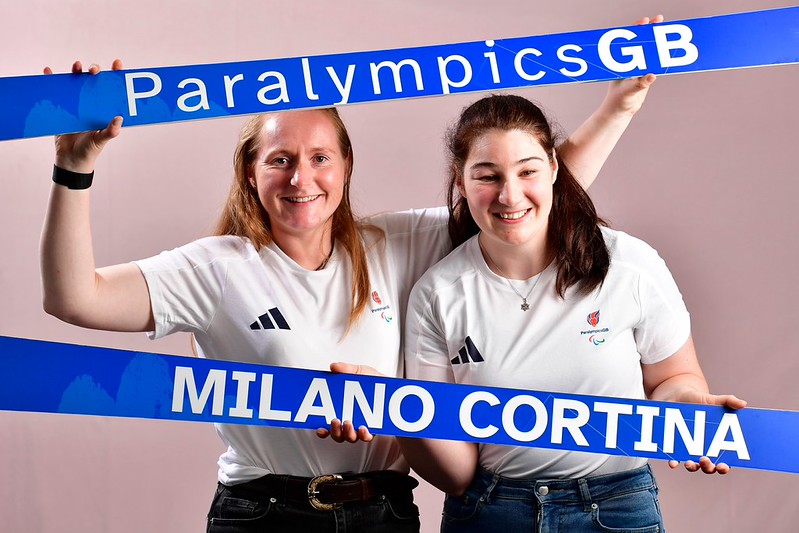
• Menna Fitzpatrick, Katie Guest (guide)
• Sam Cozens, Adam Hall (guide)
• Fred Warburton, James Hannan (guide)
• Dom Allen
• Hester Poole, Ali Hall (guide)
• Neil Simpson, Rob Poth (guide)
Para Snowboard
• Nina Sparks
• Matt Hamilton
• Davy Zyw
• Ollie Hill
• James Barnes-Miller
Para-Alpine Skiing Schedule (GMT)
Saturday 7 March
Men and women’s Downhill — 09:30–13:15
Sunday 8 March
Men and women’s Super-G — 09:30–13:15
Monday 9 March
Men and women’s Alpine Combined
Super-G: 09:00–11:30
Slalom: 13:00–15:40
Thursday 12 March
Women’s Giant Slalom (two runs): 09:00 -12:30
Friday 13 March
Men’s Giant Slalom (two runs): 09:00 -12:30
Saturday 14 March
Women’s Slalom (two runs): 09:00 -13:00
Sunday 15 March
Men’s Slalom (two runs): 09:00 -12:00
(All times GMT. Schedules may adjust due to weather conditions.)
Para Snowboarding Schedule (GMT)
Saturday 7 March
Snowboard Cross Seeding — 11:00–12:03
Sunday 8 March
Snowboard Cross Knockout Rounds and finals – 11:00 -12:49
Saturday 14 March
Snowboard Banked Slalom – 10:00 – 12:56
(All times GMT. Schedules may adjust due to weather conditions.)
What to Watch For
If you’re new to para-alpine skiing, look out for:
The speed of Downhill and Super-G
Technical mastery in Slalom and Giant Slalom
The teamwork between visually impaired athletes and guides
The variety of adaptive equipment
How close races become after factoring is applied
If you’re new to para-snowboarding, look out for:
The speed and high octane races of snowboard cross
Technical mastery of banked slalom
The variety of adaptive equipment
How close the races are in both banked slalom and snowboard cross
Where to Watch and Follow
In the UK, the Milano Cortina 2026 Paralympic Winter Games will be broadcast live on Channel 4, with coverage available on TV and online throughout the Games.
Follow the Ski Club of Great Britain British athlete updates and race results, helping you get more from watching world-class para skiing and snowboarding on the biggest stage.
03 / 02 / 26




 Menu
Menu