
 Menu
Menu Close
Close
- News
- Aosta Valley: The Italian High Alps
The Aosta Valley is a lot of ski country for one valley. The peaks tell the story: Mont Blanc to the west, the Matterhorn to the north, Monte Rosa to the east. Between them sit five major ski areas, each with its own reason to make the journey.
For 2026/27, the valley also has a substantial amount of new lift infrastructure. Three new 10-person gondolas are opening at Courmayeur and La Thuile, part of a combined £64 million investment, while the Aosta Valley returns to the Ikon Pass for a second season, with seven days across its five major ski areas and Skyway Monte Bianco, with no blackout dates.
The attraction is as much the sheer amount of skiing as the variety of it. More than 500km of groomed pistes, extensive off-piste and five major ski areas mean there is plenty of terrain to get through – but the bigger draw is how different each day can feel.
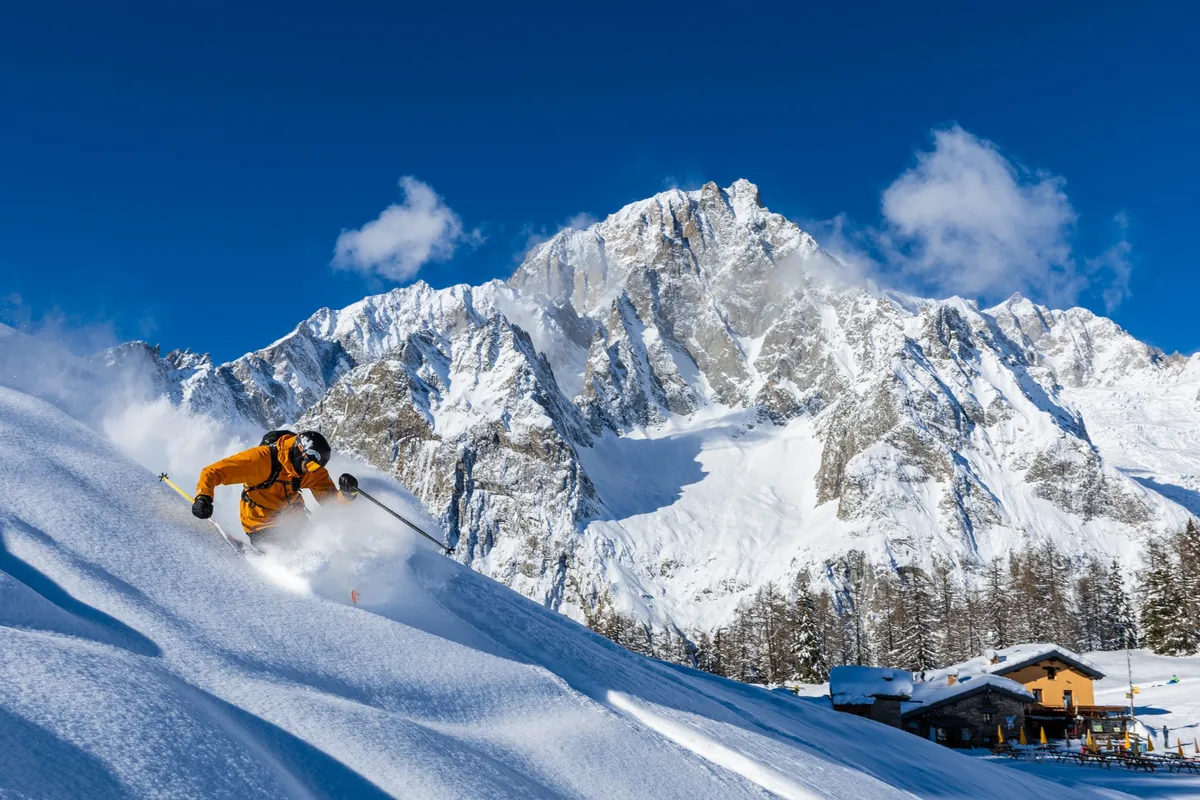
Courmayeur: ski beneath Mont Blanc
Start at Courmayeur, where Mont Blanc dominates the skyline and the skiing spreads across the Chécrouit and Val Veny faces. There are more than 100km of terrain, including 43km of groomed pistes and extensive off-piste, with 1,530m of vertical between the village and the 2,755m summit.
The pistes are only part of the story. From Youla and Arp, the terrain becomes considerably more serious, with steep couloirs, sustained vertical and north-facing slopes. The area has hosted the Freeride World Tour, and on a good day this is the sort of terrain that can keep strong skiers busy without ever needing to leave the resort.
For 2026/27, two new 10-person gondolas replace the Chécrouit cabin and Maison Vieille chair, reducing the number of lifts and adding wind-resistant panoramic cabins. The new system converges at Plan Chécrouit, while the Maison Vieille beginner area is also being redesigned.
Go higher: Skyway Monte Bianco
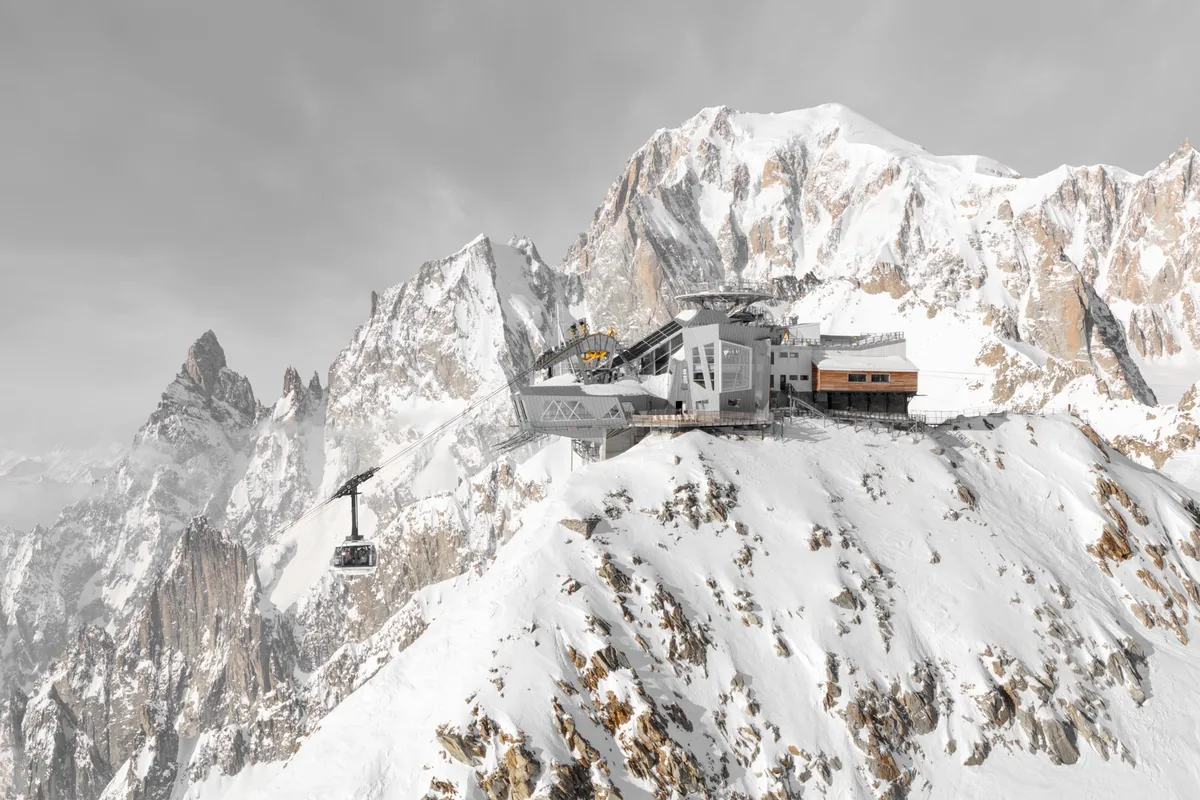
Then there’s the Skyway Monte Bianco, which takes skiing into a different league. Its rotating cabins rise from Courmayeur to Punta Helbronner at 3,466m, looking out across the Italian side of Mont Blanc and its surrounding glaciers.
This isn’t piste skiing. The Toula Glacier drops back towards Courmayeur through steep glacial terrain and the woods of Pavillon, while the Vallée Blanche heads towards Chamonix for around 20km and more than 2,700m of vertical. Both routes are unmarked and ungroomed and require a certified mountain guide.
That makes Skyway less of a ski lift than a gateway into some of the Alps’ most serious glacial terrain.
La Thuile: cross the border
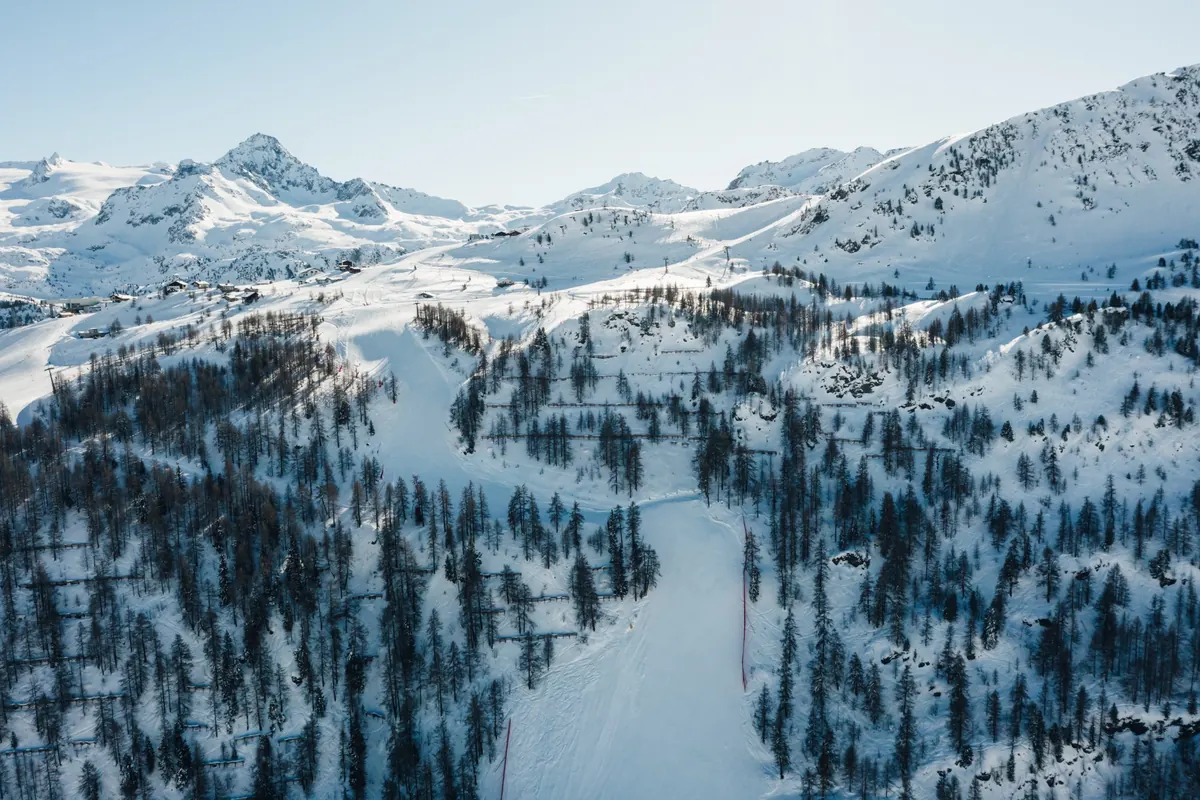
Thirty minutes down the valley, La Thuile has a rather different feel. The skiing is more open and expansive, with 152km of pistes forming the Italian half of the Espace San Bernardo with La Rosière in France. The international link means you can ski across the border during the same day, moving between Italy and France without changing your base.
There is serious terrain here too. Mont Valaisan provides north-facing freeride skiing, while the Franco Berthod piste reaches a 76% gradient and has hosted the Women’s Alpine Ski World Cup.
For the coming season, La Thuile is replacing two chairs on the main route towards Chaz Dura with a new 10-person gondola. A mid-station will make the upper mountain more accessible to beginners, while the gondola will also carry pedestrians.
Cervinia: ski the Matterhorn
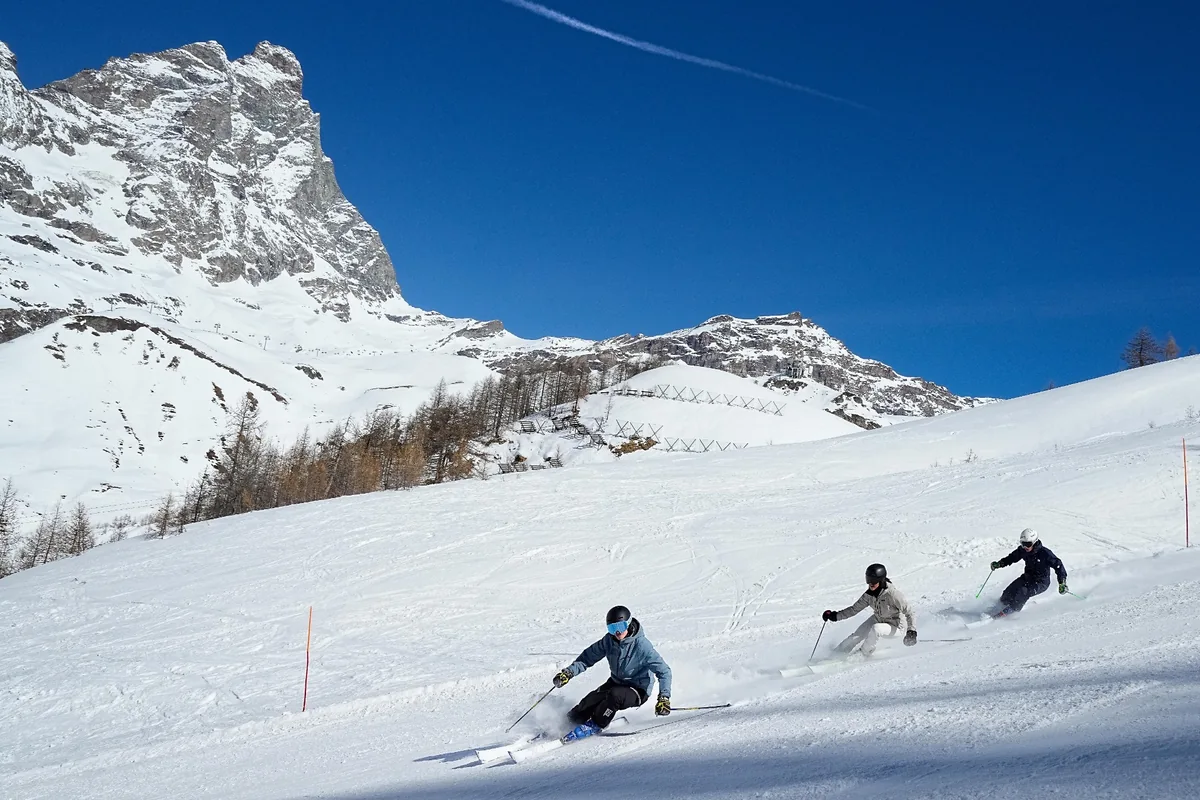
If Courmayeur is about Mont Blanc, Cervinia is about the Matterhorn. The Italian side of the mountain rises from Breuil-Cervinia and Valtournenche to Plateau Rosà at 3,480m, with 160km of pistes on the Italian side.
The obvious appeal is the link with Zermatt. From Plateau Rosà, you can cross into Switzerland and ski the larger Matterhorn network, which stretches beyond 320km across the two countries.
There is also a notably long descent back down: the top-to-bottom route runs for around 22km, dropping close to 2,000m of vertical. Cervinia’s altitude also makes it one of the valley’s most useful options when snow conditions elsewhere are less certain.
The 2026/27 season marks 90 years since the first lift opened here. A much larger transformation is already underway: Cervino The One, a new 3S tri-cable lift, is planned for 2029/30, eventually creating a second connection from the village towards the glacier.
Monterosa: follow the freeride
Then there’s Monterosa, spread across three valleys linking several distinct ski areas: Champoluc in the Ayas Valley, Gressoney-La-Trinité in the Gressoney Valley and Alagna Valsesia across the border in Piedmont. Together they have 120km of marked pistes, but it is the terrain beyond them that really defines the area.
From Punta Indren at 3,275m, lifts open into a high-mountain landscape of glaciers, 4,000m peaks and extensive lift-accessed freeride terrain. Legendary descents including Balma, Netscho and Lost Valley are among its classic lines, while local guides can help you explore further. Monterosa has hosted a Freeride World Tour Challenger event since 2024, with another stop scheduled for 2027.
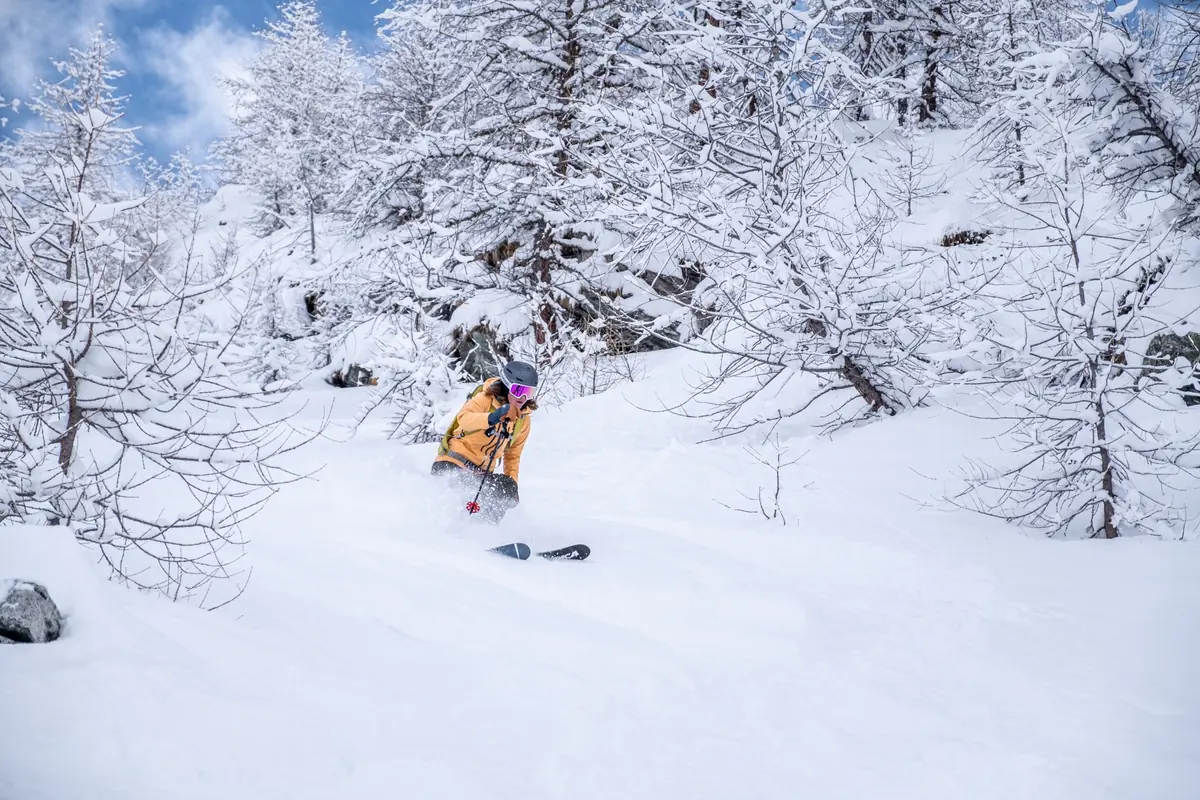
Pila: ski from the city
And then there is Pila, which offers perhaps the easiest change of all. A gondola runs directly from Aosta to the ski area in around 18 minutes, turning the regional capital into a ski base.
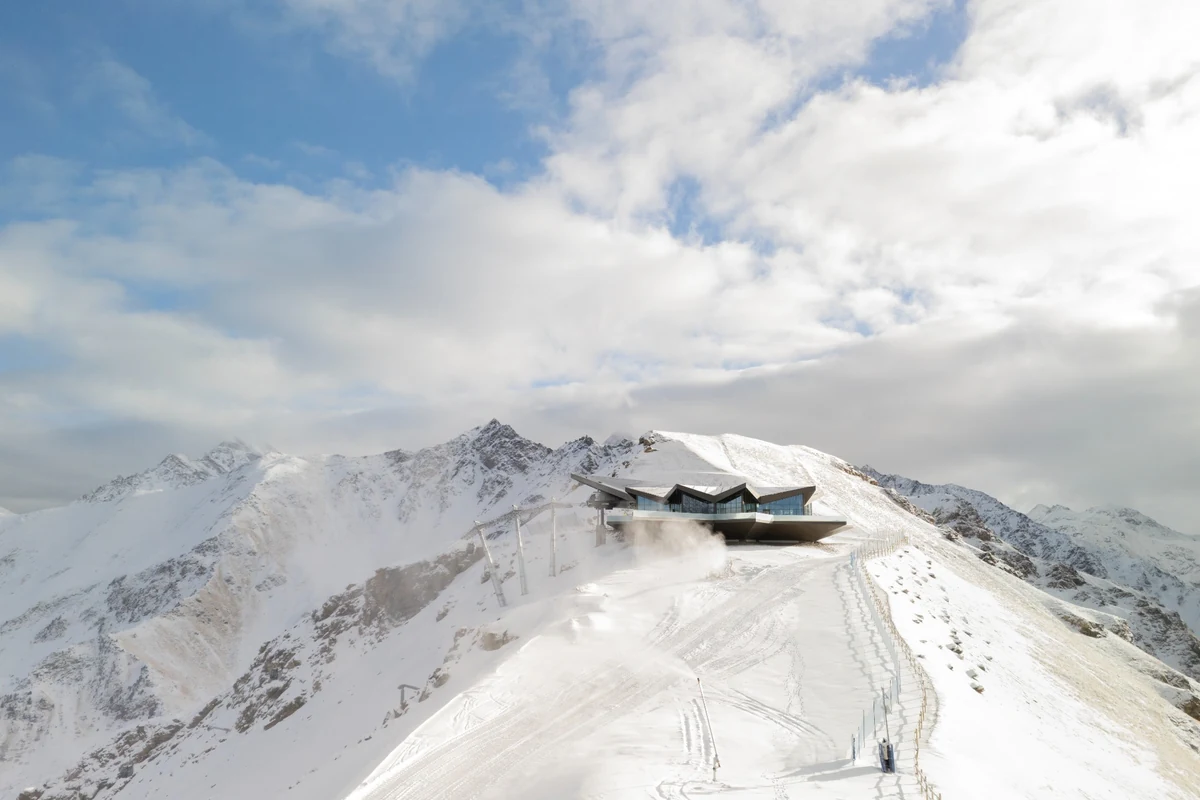
The 70km ski area reaches 2,723m and has terrain for all abilities, extensive snowmaking and the Areaeffe snowpark. At the top, Stella di Pila, which opened in 2025/26, provides a panoramic terrace with views towards Mont Blanc, the Matterhorn, Monte Rosa and Gran Paradiso.
The unusual part is what happens afterwards: the gondola drops you straight back into Aosta, where the Roman and medieval centre, restaurants and bars are right outside.
The beauty of the Aosta Valley is that you can keep changing the plan. There’s no need to commit the whole week to one mountain when Courmayeur, La Thuile, Cervinia, Monterosa and Pila are all within reach. Pick the weather, pick the snow, pick the mood and go.
For 2026/27, the Ikon Pass gives that variety a practical advantage: seven combined days across Courmayeur, La Thuile, Cervino Ski Paradise, Monterosa, Pila and Skyway Monte Bianco, with no blackout dates.



 Menu
Menu